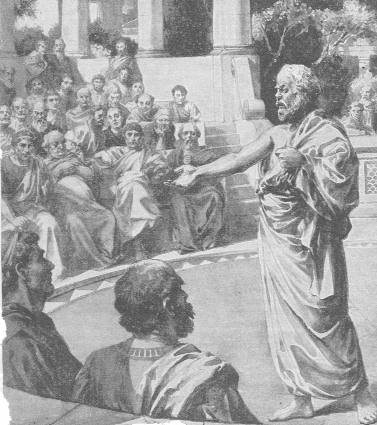
The trial of Socrates (399 BC) occurred in the Heliaea, a popular tribunal, located at the bottom of Athens’s Agora. The heliastes (judges) mistook Socrates for a sophist (in a time when the sophists were commonly blamed for the defeat in the Peloponneses War and for the weakness of young citizens); the philosopher refused to defend his cause and accepted the sentence to death. Far from illustrating the judicial power, this event has remained an example of misguided democracy.


/https%3A%2F%2Fassets.over-blog.com%2Ft%2Fcedistic%2Fcamera.png)